
Squirrels and Dogs: A Daily Drama on the East Coast
If you live on the East Coast, chances are you share your neighborhood with squirrels—and if you have a dog, you’ve probably witnessed the daily standoff between the two. Squirrels may be small, but they have a big presence in our yards, trees, and dog walks. Understanding a little more about squirrel behavior can help explain why dogs find them so irresistible.
Squirrels and Dogs
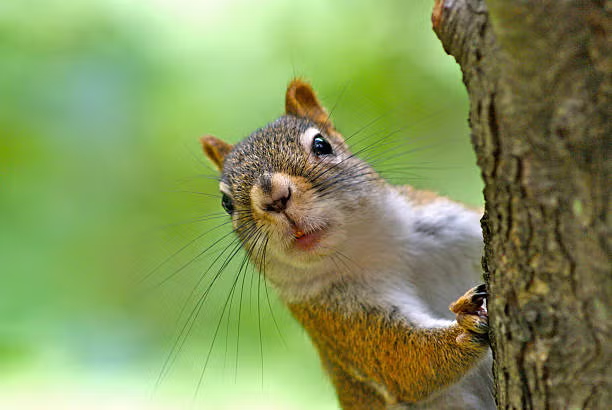
What Kinds of Squirrels Live on the East Coast?
The most common squirrel you’ll see is the Eastern gray squirrel, easily recognized by its bushy tail and gray-brown coat. In some areas, especially the Southeast, you may also see fox squirrels, which are larger and often have rust-colored bellies. Red squirrels are less common in suburban yards but are smaller, faster, and notoriously feisty.
Despite their differences, all squirrels share similar habits—and dogs don’t tend to discriminate.
Where Do Squirrels Live?
Squirrels typically live in trees, building leafy nests called dreys high above the ground. Some also nest in tree cavities or, occasionally, in attics or sheds. These nests are well-insulated and safe from many predators.
At night, squirrels settle into their nests to sleep. They’re diurnal animals, meaning they are active during the day and sleep at night—unlike many of the wildlife your dog might smell but never see.
A Day in the Life of a Squirrel
Squirrels usually wake up around sunrise. Early morning and late afternoon are their busiest times. During the day, they can be seen:
- Foraging for food (nuts, seeds, berries, buds)
- Burying food to retrieve later (they have excellent spatial memory)
- Chasing other squirrels away from “their” territory
- Sitting very still, pretending they don’t see your dog
Midday is often quieter, especially in hot weather, when squirrels may rest in the shade before becoming active again in the late afternoon.
Are Squirrels Smart… or Just Lucky?
Squirrels are surprisingly clever. They can remember hundreds of food cache locations, adapt quickly to new environments, and often use zig-zag escape patterns to avoid predators. That said, they also rely heavily on speed and trees rather than strategy—so what looks like cunning behavior may sometimes be instinct and agility rather than careful planning.
Still, they seem to know exactly how close they can get to a dog before making a dramatic escape up the nearest tree.
Why Do Dogs Love to Chase Squirrels?
For most dogs, chasing squirrels taps into their prey drive, an instinct that varies by breed and individual temperament. Herding dogs, terriers, hounds, and sporting breeds are especially likely to fixate on squirrels—but dogs of nearly any breed may join the chase.
Some dogs that are less interested in squirrels include:
- Very laid-back senior dogs
- Certain toy breeds with lower prey drive
- Dogs that have been extensively trained to ignore wildlife
That said, even the calmest dog may suddenly discover an inner hunter when a squirrel darts across the yard.
What Would a Dog Do If They Actually Caught One?
This is a common question—and an important one. If a dog were to catch a squirrel, outcomes can range from:
- Dropping it immediately once it stops moving
- Injuring or killing the squirrel
- Attempting to play with it (which is still dangerous)
Squirrels can bite and scratch, and they may carry parasites such as fleas, ticks, or intestinal worms. While rabies is uncommon in squirrels, any wildlife bite or exposure should be taken seriously, and your veterinarian should be contacted if your dog has direct contact with a squirrel.
The Takeaway
Squirrels are a normal—and unavoidable—part of life on the East Coast. While they may seem mischievous or even taunting, they’re simply following their daily routines. For dogs, the thrill of the chase is instinctual and often irresistible.
Keeping dogs leashed on walks, supervising backyard time, and maintaining good parasite prevention can help keep these everyday wildlife encounters safe—for both your dog and the squirrels they love to chase.